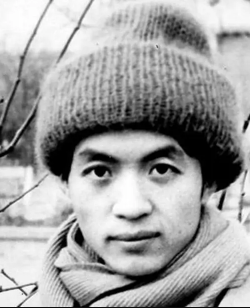

海伦·文德勒简介

海伦·文德勒简介

【作者简介】 海伦·文德勒(Helen Vendler,1933—2024) 美国诗歌评论家,哈佛大学亚瑟·金斯利·波特校级教授。她关于诗人和诗歌的论著不胜枚举,所涉诗人广及莎士比亚、狄金森到希尼、毕肖普等,多获赞誉。代表作有《自然的部分,我们的部分》《约翰·济慈的颂歌》《打破风格》《诗人的成年》《看不见的倾听者》《花朵与漩涡》《大海,飞鸟和学者》等。 【译者简介】 李小均 深圳大学外国语学院教授。译作有《语言与沉默》《不负责任的自我》《捍卫想象》《村子里的陌生人》《记忆萦回》等。

经典语录

The preeminent question life asked of Stevens was whether the sublime was livable.Steven's sense of the world became one of extreme relativity, and an almost killing skepticism arose in him about his own statements, even those most deeply felt. "The things that we build or grow or do are so little when compared to the things that we suggest or believe or desire"......it is perhaps only the necessary linear form of poetry which prompts us to interpret poems more allegorically than we normally do the visual arts and forces us to see a poem as a problem secreting its own resolutions....the poem finds a middle ground of tone which is neither grand nor satiric, but may be called evaluative: ...I pursuedAnd still pursue, the origin and courseOf love, but until now I never knewThat f... the "awful but cheerful" activities of the world include the acts by which man domesticates his surroundings, even if those surroundings are purely mechanical, like the filing station or the truck in Brazil painted with "throbbing rosebuds".The definition of life in the conversion of the strange to the familial, of the unexplored to the knowable, of the alien to the beloved.No domesticity is entirely safe. As in the midst of life we are in death, so , in Bishop's poetry, in the midst of the familiar, and most especially there, we feel the familiar as the unknowable. "I lost two cities, lovely ones. And vaster,some realms I owned, two rivers, a continent...the art of losing's not too hard to masterthough it may look like (Write it!) like disaster.""A moose has come out of/ the i... When in “Words” Plath represents the eye regarding the pool, it no longer views its narcissistic image, as in “Gigolo,” but rather perceives the ordaining conditions of fate. The objectivity of regard in “Words,” as in “Berck-Plage,” arises from Plath’s adoption of a view that is post-traumatic, even posthumous, but it is a point of view tenaciously maintained as long as the poet is alive. It cools the eye and slows the pace from Ariel’s rapidity to water’s slow descent; it allows dryness as well as tears; it demands above all a dispassionate diagnosis of how things stand. A crusty crankiness at modern life in Manhattan opens this collection: we live in "numbered caves in enormous jails," surrounded by the "lawless marches" of the Asphalt Lands; "mean cafes" entertain the lazy, while the stultified workers view "vulgar rubbish" and listen to "witless noise", making their "lewd fancies...of flesh debased."Nothing Auden does of his own and on his own is ever uninteresting: as the liveliest man-of-letters in the English-speaking world, he deserves front pages; his trifles are better than others' lifework."We can only do what it seems to us we were made for, look at the world with a happy eye but from a sober perspective."His enduring status as an outsider--the bachelor among the married, the Englishman among New Yorkers (or Austrians or Greeks), the ... “What is the name of that color?” the speaker of “Berck-Plage” asks as she sees the earth into which Percy Key will be lowered. She answers herself in another succession of noun phrases, this time images of post-traumatic aftermath: “Old blood of caked walls the sun heals, / Old blood of limb stumps, burnt hearts.” If the immediate artery spurt of the blood jet is poetry (“Kindness”), then these images of old blood on healed walls, old blood of earlier amputations (such as Plath’s father’s), and calcined hearts from a fire now cold, tell us that Plath sees the possibility of a style that is not a present-tense outburst resembling a jet from a living wound but a style that is more diagnostic, more measured, speaking after the fact about the caked walls, the stitched stump, the charred heart... "I can but put my weapon up, andBow you out...Since in your hearing words are mute, which to my sensesAre a shout"Jean Garrigue, so far her best critic, wrote,"Of Observations (a volume of her poems) one might say: it is first and last a voice. The voice of sparkling talk and sometimes very lofty talk, glittering with authority.""But we prove, we do not explain our birth.""I do these/ things which I do, which please/ no one but myself."She wrote her great poem "Marriage," in which she examined, satirized, envied, and dismissed--as a possibility for herself--that institution in which two "I"s attempt a real speech."The lion's leap would be mitigated almost to harmlessness if the lion were clawless, so precision is both impact and exactitude, as with surgery."
Copyright ©2023 读经典  |   渝ICP备2023004587号